We believe that, to drive real change, impact should be measured
At Ananda we believe that ‘doing good’ is no longer just a matter of ethics – it’s also good business. To prove this, we have been tracking quantifiable impact KPIs over time and we proudly share the outcomes on this report.
Our track record speaks for itself:
48
companies
invested in to date
490+
million euro
invested in our portfolio
diverse founding teams in our portfolio
4,465
jobs
created through our portfolio companies
48+
million people
benefitted from our portfolio
diversity within the Ananda team (gender, ethnicity, disability)
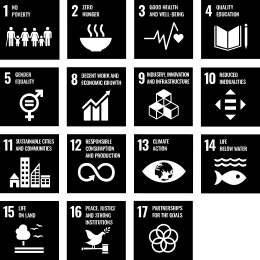
17
SDGs
addressed by our portfolio companies
4,400+
qualitative and quantitative impact data points

7
planetary
boundaries addressed
Each of our portfolio companies has a unique mission and solution to tackle the world biggest challenges at scale. We visualise the Impact by way of ‘impact multiples’.
At the beginning of the investment period, we work together with founders to define a unique set of impact KPIs and targets that are closely linked to each company’s mission. If the company grows, the impact grows. This ensures there is no trade-off between impact and profitability – because true impact has to be built into a company’s DNA.
$$M_c = \sum_{x} \left( \frac{R_x}{T_x} \cdot w_x \right)$$
Mc = Company Impact Multiple | x = Impact Indicator | R = Impact realized | T = Impact target | w = weight
$$M_p = \sum_{c} \frac{M_c \cdot I_c}{I_p}$$
Mp = Portfolio Impact Multiple | Ic = Total Investment Company | Ip = Total Investment Portfolio (fund)
At the company level, the realised impact values are divided by the target values and then weighted to determine the Company Impact Multiple. On the basis of the Impact Multiples of each portfolio company an overall Portfolio Impact Multiple is calculated.
An impact multiple over 1 means we have exceeded our impact targets, a multiple of less than 1 means we have not met our impact targets (yet).
Fund II has been the first fund in Europe linking impact and carry, so we are especially proud to show that the theory holds up in real life. The fund continues to exceed its impact targets, reaching an impact multiple of 1.12.
Fund III is now showing an impact multiple of 1.82, a substantial increase from last year’s 1.51. This strong performance highlights the fund’s continued progress and its growing contribution to delivering meaningful impact at scale.
Fund IV has shown further progress in its impact multiple, reaching 0.59. As the fund is still in its early years, this already represents strong progress toward its final targets.
ESG reporting
While the Impact KPIs are the core part of how we assess the output of our portfolio companies, we strongly believe that this should go hand-in-hand with fair and sustainable internal processes.
Our portfolio companies are often very small, so it’s important to consider what administrative burdens and processes are feasible at this early stage. Our goal is to support and guide them in building up these practices.
In 2025, our ESG reporting processes and workflows proved robust and effective. We have efficiently collected a total of 100+ ESG data points from each portfolio company. Here are some selected metrics from our data collection conducted in Q1 2026 covering the year 2025.
Percentage of employees by gender

39%

61%

0.5%
C-level management by gender**
36%
63%
1%
Environmental
percentage of Companies which measured their footprint on 2025
percentage of Companies which have an Environmental Policy
Social
have policies relating to diversity and equal opportunity
monitor the happiness, engagement, and mental health of employees
Governance
have a data privacy policy
have a code of conduct